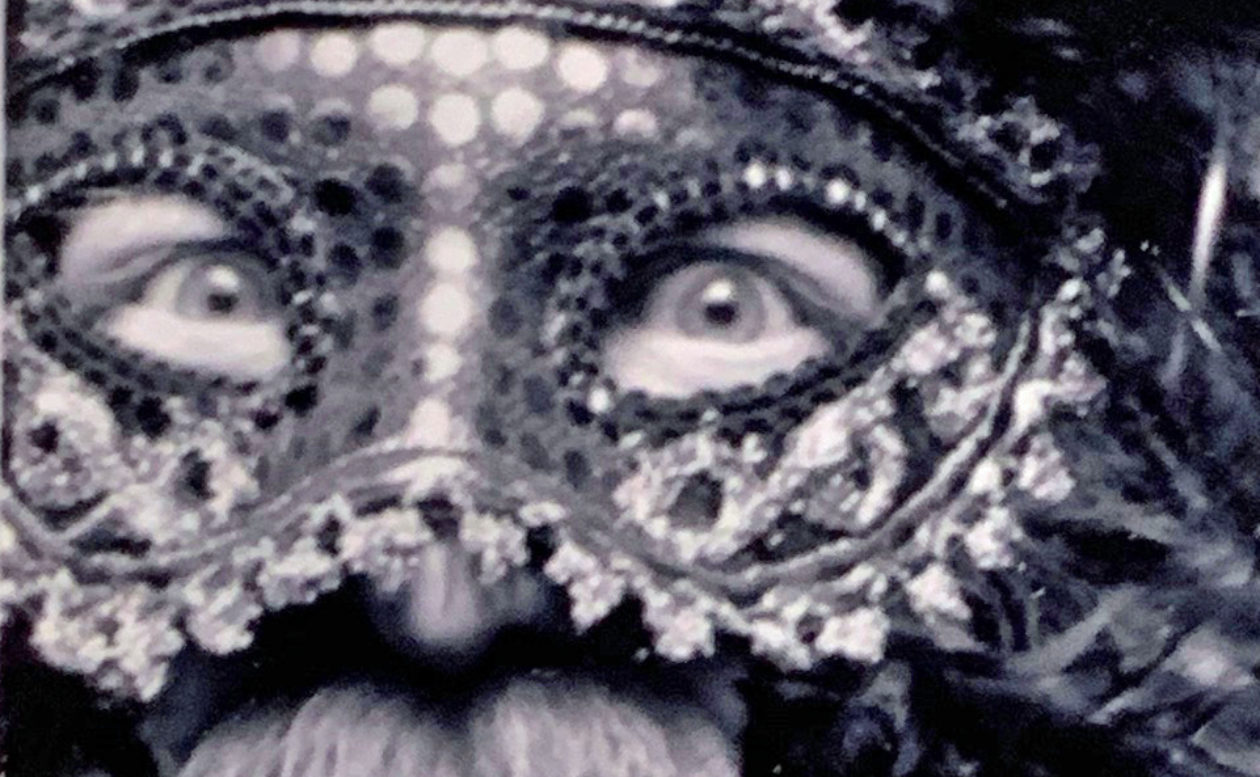
Book of the Dead 10
No person ever loved me more than my Grandmother.
And I don’t mean that as something that lifts me up.
I mean that as a testament to the goodness of Grandma.
The depth of my love of steamed eggs, or alternatively, custard pie
Are mere substitutions for the depth of my love for Grandma.
But Grandma died while I was in Marine Corps boot camp in 1969.
Her seventh heart attack did her in and it mattered not to the Corps
How much I loved my Grandmother or how much she loved me;
I was not permitted leave during boot camp for this or any reason.
After, Grandma came to me in boot camp, though she didn’t bring custard pie.
Something prohibited me from climbing the rope on the obstacle course.
Despite my intent and will, I could climb up only about ten feet and stall.
And there hung I, between Heaven and the drill instructor,
Who promised unpleasant consequences if I came down before I went up.
Long minutes hanging in limbo before succumbing to the DI’s promise.
Eventually, through a trick of faith and some personal instruction,
My feet and hands learned the trick. I became more of a man and more of a Marine.
But the truth of my heart was, I asked Grandma to help and she did.
Long after the Marine Corps, after the war, I fell asleep driving home alone one night.
Of course, I don’t know if I slept a moment or a minute, I was jolted
awake by a strike (more than a nudge, less than a slap) in the small of my back.
Awake, aimed exactly for a cement bridge abutment on the freeway,
Probably about a half-second before impact,
Grandma’s dusting powder scent filled the air in the car.
There is more to say here but I will leave it between Grandma and me.
Tag Archives: writing
Book of the Dead 9
With age, things change:
Skin thins as if by evaporation.
Gums recede.
Color leaves the hair.
The skeleton shrinks
In size and density.
We are gradually less.
At the end, we cease,
As far as we know,
In this corporeal world.
We set aside our bodies,
Like last year’s model.
We set aside physical interaction.
But that is all obfuscation.
It is a trick of language to say
We did something
And then say We don’t do something.
For the dead, there is still so much to do.
There is the going away,
Likened to some journey that changes us.
And if we go away,
We must be going to some place.
Another place, not like this place.
For what good is an afterlife,
If it is merely another iteration of this life?
Why go to all the bother of aging and dying
Just to wake up in another here?
There are always tests to see if the dead are worthy.
Ancient Egyptians had Ma’at,
Simultaneously Justice and Truth,
And Goddess.
If the heart of the dead
Balanced on a scale against her feather,
The dead could pass to the afterlife.
If it did not, the dead received utter obliteration.
It was all about the state of the heart.
Hebrews, Christians and Muslims
all measure the good of the heart
And promise obliteration if there is not enough.
Today, as a cultural species, we don’t need religion
to practice the concept of obliteration.
We begin before physical death.
The soon-to-die begin to lose autonomy.
It happens as if by evaporation,
The value of a full person evaporates.
We take their positions.
We take their possessions.
We take their permissions.
Once they actually cease,
There is so little change in the world.
It’s like they were always a memory.
Book of the Dead 8
Death took my grandson
Two weeks before his birth.
I flail, seeking to understand,
Not loss,
For the poet knows all there is to know of loss
(if he’s paying attention).
Rather to understand
All that was given.
Is the mother of a dead child
Enriched by her new insight?
Is the father of a dead child
Prepared to comfort his wife
While pretending his own loss
Is smaller?
Is a sister or a brother,
Bludgeoned into silence,
Incapable of understanding?
Of doing anything that might heal?
All the women grieve their own losses.
And reconceive the trove of their losses in another’s.
It is the unfathomable lot of women
To bear the reminder
In the wonder of what might have been.
Book of the Dead 7
It is the duty of the old poet
To teach about living a life of poetry
To the young poets.
First, find a young poet.
There aren’t very many,
Although there are thousands
Who stand up on stages
And hurl swear words.
Some of it is actually poetic.
But a poet soon learns that rage
Is a shallow pool.
It feels great,
All fire and invective,
But those poems are largely disposable.
Hate, likewise, has its appeal.
And, likewise, often has a short shelf life.
But the lasting poems
Dig through the anger of a life
And the living.
It excavates all the hate
And drills down into the pain;
The despair.
There is lots of hate,
Probably more anger.
And those are fine stones
Upon which to whet your craft.
Poetry craves,
Not just the poetic utterance,
But the poetic silence as well.
Without the silence,
It is the clacking of the keyboard.
Without Death’s utter refusal
To answer the questions,
There is no need for poems.
Book of the Dead 6
Book of the Dead 6
In life, my mother said she longed to travel.
So when she died
Her children took on the task
Of delivering her ashes
to random and various locations,
Widespread as possible.
I traveled on an airplane
With some of Mother’s ashes
In a zip-lock plastic bag
In my hip pocket.
I was conscious of her presence
As I sat in that narrow seat.
And I set them free
In the shadow of Haystack Rock
At Cannon Beach.
She entered the sea
And turned it milky gray
On the first incoming wave,
Then drifted out a few feet
And returned wider on the next wave.
And then, like some kind of ethereal sea bass
Might flip its tail,
She splashed at me and was gone.
I won’t say she hasn’t been back.
In life, my mother said she longed to travel.
So when she died
Her children took on the task
Of delivering her ashes
to random and various locations,
Widespread as possible.
I traveled on an airplane
With some of Mother’s ashes
In a zip-lock plastic bag
In my hip pocket.
I was conscious of her presence
As I sat in that narrow seat.
And I set them free
In the shadow of Haystack Rock
At Cannon Beach.
She entered the sea
And turned it milky gray
On the first incoming wave,
Then drifted out a few feet
And returned wider on the next wave.
And then, like some kind of ethereal sea bass
Might flip its tail,
She splashed at me and was gone.
I won’t say she hasn’t been back.
Food & Sex
(From a glossy mag quiz re: food and sex)
At my age do I have a comment about food and sex?
Does a fat old man have the right?
Am I still relevant in the final, um…quarter of my life?
What of audience for my say about food and sex?
After all, I remember the summer of love first hand, so to speak.
(Speaking of love)
I have had sex without love.
I have had love without sex.
And I have had no love without sex.
No love without sex is boring.
Love without sex is boring,
What could be worse in America?
But sex without love is like
(Speaking of food)
Steak without the sizzle–
Steak devoid of fat–
Tofu-based ground meat product–
Not even good enough to make a decent chili.
It doesn’t matter how hot you make it.
Add garlic and chilis and cayenne,
Add salsa and white pepper, black pepper, red pepper,
Add mustards, white, black, yellow,
Even oysters and a tiny bit of chocolate,
It’s still just soy
Dressed up in crotchless panties and a garter belt.
Sex without love is nice,
Nice like low-cal sherbet made from skimmed milk and xylitol,
Nice like soda with aspartame,
Nice like left-handed sugar,
Nice like microwave popcorn with shake-on artificial butter flavored salt substitute.
Fucking your way to love
Is like eating your way to thin,
Or praying your way to heaven
Because in an hour,
Or after a shower,
You just need more.
The itch remains unscratched.
The void remains unfilled.
And eventually you get some disease
Or you figure out that some things aren’t good for you:
That some sex is goofy;
That some sex is a little crazy;
It’s all fun and games
Until you break your dick.
So you lay off and try to heal,
Sitting on the couch
(Speaking of food)
Eating pop tarts,
Tater tots, fish sticks, fruit by the yard,
Wonder bread, Lucky Charms, Fritos,
Ubiquitous bean dip, candy bars,
Cup cakes, Twinkies, smokey links,
Propyl gallate, butylated hydroxyanisole
Or butylated hydorxytoluene,
Potassium bromate, monosodium glutamate,
Ascesulfame K, Olestra, sodium nitrate,
And always, always,
hydrogenated vegetable oil with
Blue 1, Blue 3,
Red 3, Yellow 6.
It’s all in there,
Like good pornography.
And eventually there you are again,
Staring at your reflection in the pool
And wondering why that erection won’t go away,
Understanding the meaning of priapism.
And clitorism,
Or why your panties won’t dry
In the middle of the swirling snow squall.
Trying to come in from the storm,
Trying to come in to the table
Trying to come in
Trying.

The Solstice and the Poet’s Metaphor
Winter Solstice is the Poet’s Holiday–
Maximum darkness
With flat gray skies
During a short, sunless day.
The chasm, at night,
Between dark and light,
Grows bottomless.
Accustomed to their night vision,
The Poets peek
Through the veil
At their glimpse of despair
(for Despair is the finest of poetic feelings)
And bear witness to
The false promise
Of the returning light’s respite.
Tomorrow is new.
We count the days.

Wrung Out
After all the diuretics and tears,
When I die
Throw me away
Like an old
Wrung out kitchen sponge.
[292]

My Heart is Heavy
The moment I woke today I said, “My heart is heavy,”
But I did not mean it.
Why do we say that?
The heart isn’t heavy, no matter how sad we may be.
A man’s heart weighs something like 10 or 11 ounces,
A woman’s is even less: 8 or 9.
If your heart is heavier than that,
It isn’t from sadness.
It has become enlarged from some medical condition and it may be treatable.
And even if you had a heavy heart,
Say five pounds or so,
It could sit in your lap with little difficulty,
Like a cat or a small dog.
A cow’s heart weighs about 5 pounds
And would not weigh me down much.
Even a horse’s heart is easily managed at 8 pounds.
I have had dogs in my lap bigger than a giraffe heart at 26 pounds.
An elephant heart is something like 60
But it would still fit in my lap.
It is not the heart that is heavy;
It is the world.
“The world is heavy,” is what we mean to say.
“I can no longer bear it in my lap.”
It is my heart’s job to weigh the world.
The weight of the world can crush a man’s heart to jelly
And his bones to powder.
That is what I meant to say this morning.
The world is heavy
And I am in danger of being crushed.
[269]

Can Until You Can’t
I am a poet.
I can hold two (or more) contradictions
in mind simultaneously.
Peace can be boring
until the cloud of war appears over the horizon,
when fear is confused with excitement.
Trust can last
beyond the first betrayal,
but less often the second.
I miss your embrace
but not the cold steel in my heart.
[267]
Marilee Mouser, Here’s a haiku for you:
cold steel engenders
an insulating callous
to protect the heart
[268]
